
April 2, 2026
Sixty-one times around the sun. If you do the math, that’s roughly 35 billion miles of travel through space at 67,000 miles per hour. I slept through most of it. This morning I woke up in Wilmington, North Carolina, same as yesterday, same as ten thousand yesterdays before it. But the odometer clicked over. Another revolution complete.
I’ve never been a birthday person. In my twenties and thirties, I actively disliked them. Not because I feared getting older. If anything, I wanted to be older, wanted more runway behind me so the things I was building would carry more weight. I just never liked drawing attention to myself, a personal flaw I’ve carried like a comfortable old coat for four decades. That hasn’t changed. What has changed is everything else.
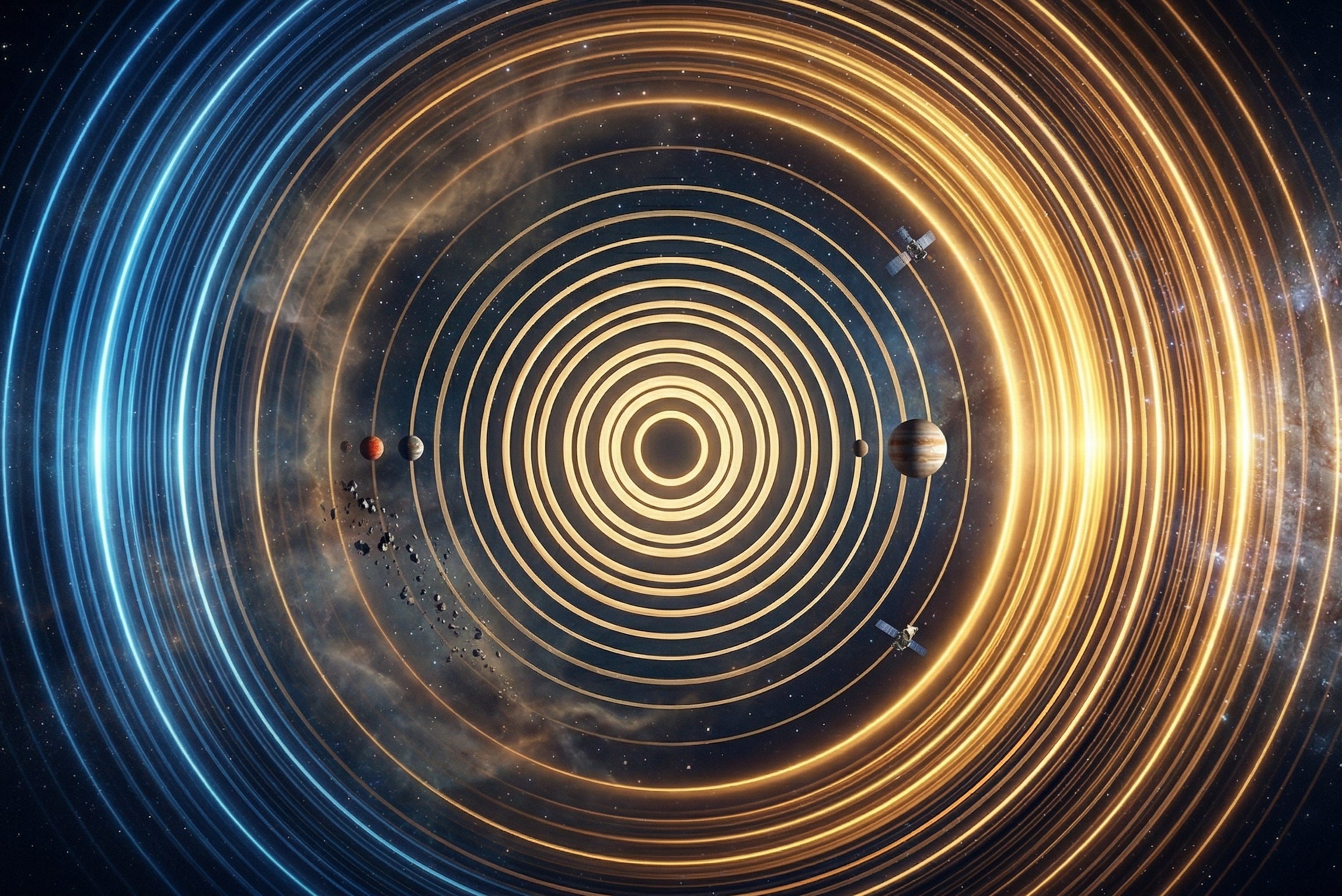
The word revolution carries two meanings, and I’ve had the strange privilege of living through both simultaneously. There’s the astronomical kind: Earth completing its patient, faithful loop around a middle-aged star. Reliable. Predictable. 365 days and change, every single time. Then there’s the other kind. The kind that rewrites the rules while you’re still learning the old ones.
In my first 20 revolutions, the most advanced technology in our house was a rotary phone and a 19-inch Zenith. By revolution 30, I was building one of the first professional sports websites in America, pushing pixels through a 56k modem and calling it the future. By 40, I was co-founding a SaaS company. By 55, I was deep in the blockchain, minting and collecting NFTs while most of my peers were still asking what a digital wallet was. By 60, I had built over a hundred projects with AI as my co-architect, my draftsman, my sparring partner. And now, at 61, the gap between what a person imagines and what a machine can build has collapsed to the width of a spoken sentence.
The orbital revolutions are steady. They never speed up. They never slow down. The technological ones follow no such courtesy. They compound. They converge. They accelerate until the distance between “impossible” and “shipping next Tuesday” shrinks to a quarter.
Peter Diamandis calls it the convergence of exponentials. I just call it Tuesday. These forces don't move in isolation. They collide. And at the collision point, the assumptions we built our careers on quietly expire.
Consider the arithmetic of acceleration. The computing power that filled a room when I was born now fits on a chip thinner than my thumbnail. The entire vinyl collection I spent my teenage years building, album by album, crate by crate, lives inside a device I can lose in a coat pocket. The blueprint I once drew by hand on a drafting table at 25 is now a prompt I speak to an AI that builds it in minutes. Every revolution around the sun, the tools get smaller, faster, and stranger. And the revolutions themselves start to blur together.
Sixty-one orbits. And the honest truth is that the change I’ve witnessed in the last three has outpaced everything that came in the first fifty-eight. Combined.
Here’s where it gets interesting.
I expect to make another sixty-one trips around this star. Maybe more. Not because I’m recklessly optimistic, though I am optimistic. Because the same convergence reshaping technology is reshaping biology. Ray Kurzweil calls it longevity escape velocity: the point at which science extends your life faster than you age through it. I don't need to debate the timeline. I just need to take care of the vehicle long enough for the science to catch up. And I intend to.
If that’s true, and the data suggests it increasingly is, then today isn’t a late chapter. It’s halftime. Less than halftime. And I have never in my life met a builder who peaked in the first half.
The first sixty-one revolutions taught me to read the patterns. A Wired magazine cover in 1994 that smelled like possibility. A Mosaic browser that made the future click. The first time I touched a Macintosh and didn’t know where to put my hands. Every one of those moments was a revolution inside a revolution, a signal buried in ordinary Thursday mornings that the next loop around the sun would look nothing like the last.
The next sixty-one will teach me things I don’t have language for yet. That’s not a fear. That’s the entire point. Uncertainty has always been where the interesting work lives.
So no, I won’t be throwing a party. I’ll mark this revolution the way I mark all of them. By building something. By paying attention to the pattern. And by reminding anyone who will listen that we are not winding down.
We’re at the halfway point. And the second half is going to be extraordinary.
Let’s go!