
{Note: This article has been updated with significant developments from the first weeks of the new year}
I’ve spent the last twelve months obsessively consuming every prediction, research report, and keynote from the frontier of technology. Hundreds of hours with Claude. Thousands of hours reading, listening, pattern-matching. ARK Invest’s Big Ideas. Andreessen Horowitz’s annual forecast. Stanford’s AI Index. McKinsey’s technology trends. Sam Altman’s blog posts. Jensen Huang’s keynotes. The abundance evangelists and the cautionary voices alike.
Here’s what I’ve concluded: 2026 will be the most disruptive year in modern human history.

Not hyperbole. Not breathless tech evangelism. A sober assessment based on the convergence of exponential curves that are all inflecting at the same moment.
And notwithstanding 2027. And 2028. Because what we’re entering isn’t a single wave—it’s the beginning of an epoch.
The Pattern I’ve Seen Before
In 1995, I was working at Nortel Networks when I saw the cover of Wired magazine featuring the Mosaic browser. I recognized it immediately: the beginning of a cycle. In my early career, I’d learned to read the signals—not just of markets, but of technological turning points.
That Wired cover was a signal. The pattern was unmistakable.
We’re doing the same thing now, but at an exponential doubling rate. The difference between 1995 and 2026? Back then, the internet took a decade to rewire commerce. What’s coming will rewire civilization in years, not decades.
The Architecture of Disruption
What makes 2026 different isn’t any single technology. It’s what I call the architecture of disruption—the collision of multiple S-curves all hitting their steep ascent simultaneously. Artificial intelligence. Robotics. Autonomous vehicles. Gene editing. Nuclear energy resurgence. Blockchain infrastructure. Each powerful alone. Converging together? Civilization-altering.
Peter Diamandis calls this the “convergence of exponentials.” It’s not a metaphor anymore. It’s measurable reality.
After synthesizing over 85 reports from frontier AI labs, venture capital firms, consultancies, and academic institutions, three macro-trends define the 2026 horizon:
The Agentic Economy. Software negotiates with software. AI agents handle payments, research, and multi-step workflows autonomously. The web itself is being restructured—from interfaces designed for human eyes to APIs designed for machine cognition.
The Physicalization of AI. Intelligence leaves the screen. Humanoid robots, autonomous logistics, and factory automation scale from pilots to production. The “physical labor” market—previously immune to digital disruption—becomes addressable.
Infrastructure as Destiny. Compute, energy, and chips become binding constraints. The data center buildout approaches 3.5% of US GDP—comparable to the interstate highway system. Power becomes the new bottleneck.
The thesis that emerges from every credible source is unambiguous: 2026 represents a structural phase-shift from AI experimentation to AI operations. The “magic” phase—where novelty drove valuations—ends. The “utility” phase—where economic value is extracted from reliability of execution—begins.
Part I: The AI Inflection
Artificial intelligence is the pinnacle. Everything else—robotics, autonomous vehicles, biotech, energy, blockchain—depends on AI disruption in some form. So let’s start where the action is.
The Timeline Is Accelerating
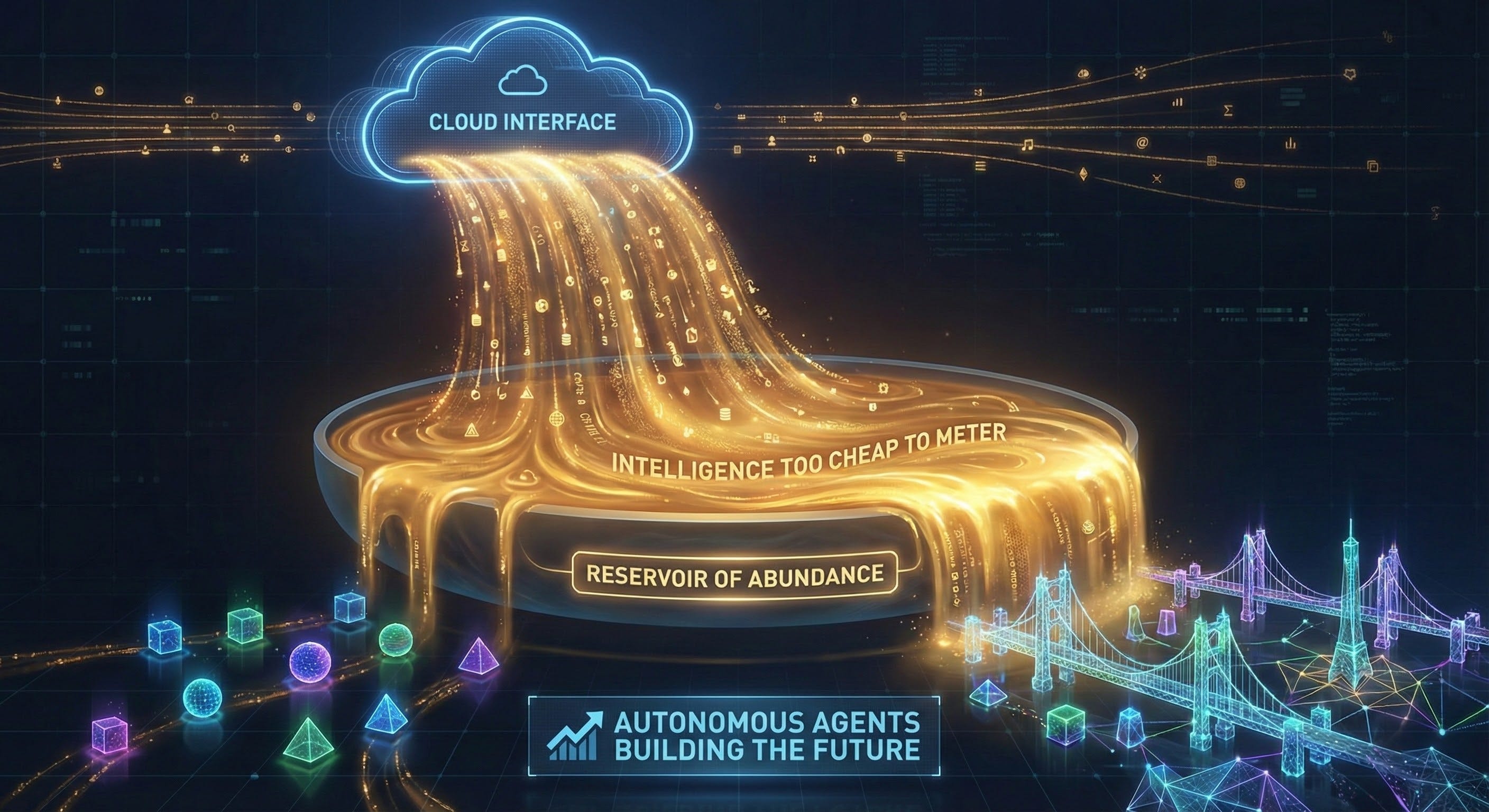
Sam Altman’s recent blog posts lay out the most explicit timeline from any frontier lab leader. “We are now confident we know how to build AGI as we have traditionally understood it,” he writes. His roadmap: 2026 brings systems that can figure out novel insights. 2027 brings robots that can do tasks in the real world. “Intelligence too cheap to meter is well within grasp.”
Dario Amodei at Anthropic echoes the timeline—AGI by 2026 or 2027, based on “extrapolated curves of the progression of AI models.” He describes current systems as “edging toward PhD level of intelligence.”
Not everyone agrees. Mustafa Suleyman at Microsoft argues AGI needs more hardware generations and time. Yann LeCun maintains current approaches have fundamental limitations. The largest survey of AI researchers—2,700+ respondents—found only a 10% probability that AI systems outperform humans on most tasks by 2027.
But here’s what matters: even the skeptics acknowledge capability is rising fast. The disagreement is about timelines, not trajectory.
The first two weeks of 2026 validated the acceleration. The arms race has never been more visible: xAI raised $20 billion at a $230 billion valuation. Anthropic closed $10 billion at $350 billion. OpenAI is targeting $30 billion in revenue for 2026—double last year. These aren't startup numbers. These are nation-state numbers.
From Answering to Doing
The shift from “AI that answers questions” to “AI that does work” is the defining transformation of 2026.
Andreessen Horowitz’s Big Ideas report describes “agent-speed” workloads—recursive, bursty, massive. Enterprise backends built for a 1:1 human-to-system ratio cannot handle this. “When an agent attempts to refactor a codebase,” they write, “it looks like a DDoS attack.” Infrastructure must evolve to be agent-native.
McKinsey’s State of AI confirms the enterprise reality: 88% of organizations now use AI in at least one function. But here’s the number that matters—23% are scaling agentic AI systems somewhere in their enterprise. The high performers have “fundamentally redesigned individual workflows.”
Forrester offers a warning: 25% of CIOs will be forced to bail out business-led AI failures in 2026. “Shadow AI” deployments—marketing, HR, and sales bypassing IT governance—will hit walls. Data breaches. Hallucination scandals. Runaway cloud costs. The adults will have to clean up the mess.
The Deflation Curve
The Stanford AI Index documents a deflation curve that changes everything. The cost of a GPT-3.5 equivalent query dropped from $20 per million tokens in November 2022 to $0.07 in October 2024. That’s a 280-fold reduction in two years.
Model efficiency is following the same curve. Achieving 60% accuracy on the MMLU benchmark required 540 billion parameters in 2022. By 2024, it required only 3.8 billion—a 142-fold reduction in model size.
What does this mean? Intelligence is becoming cheap. Not free yet, but heading there. The economic implications are staggering.
The clearest signal came January 16: OpenAI rolled out ChatGPT Go globally at $8/month—with advertising planned for free users. Eight dollars. For frontier-class intelligence. The era of AI as a luxury good ended in a single pricing announcement. When basic AI access costs less than a Netflix subscription, the business model shifts from selling intelligence to monetizing attention. We've seen this movie before. The platform layer always wins.
Part II: Intelligence Enters the Physical World
If 2023-2025 was about AI in the browser, 2026 is the year AI enters the physical world.
The ChatGPT Moment for Robotics
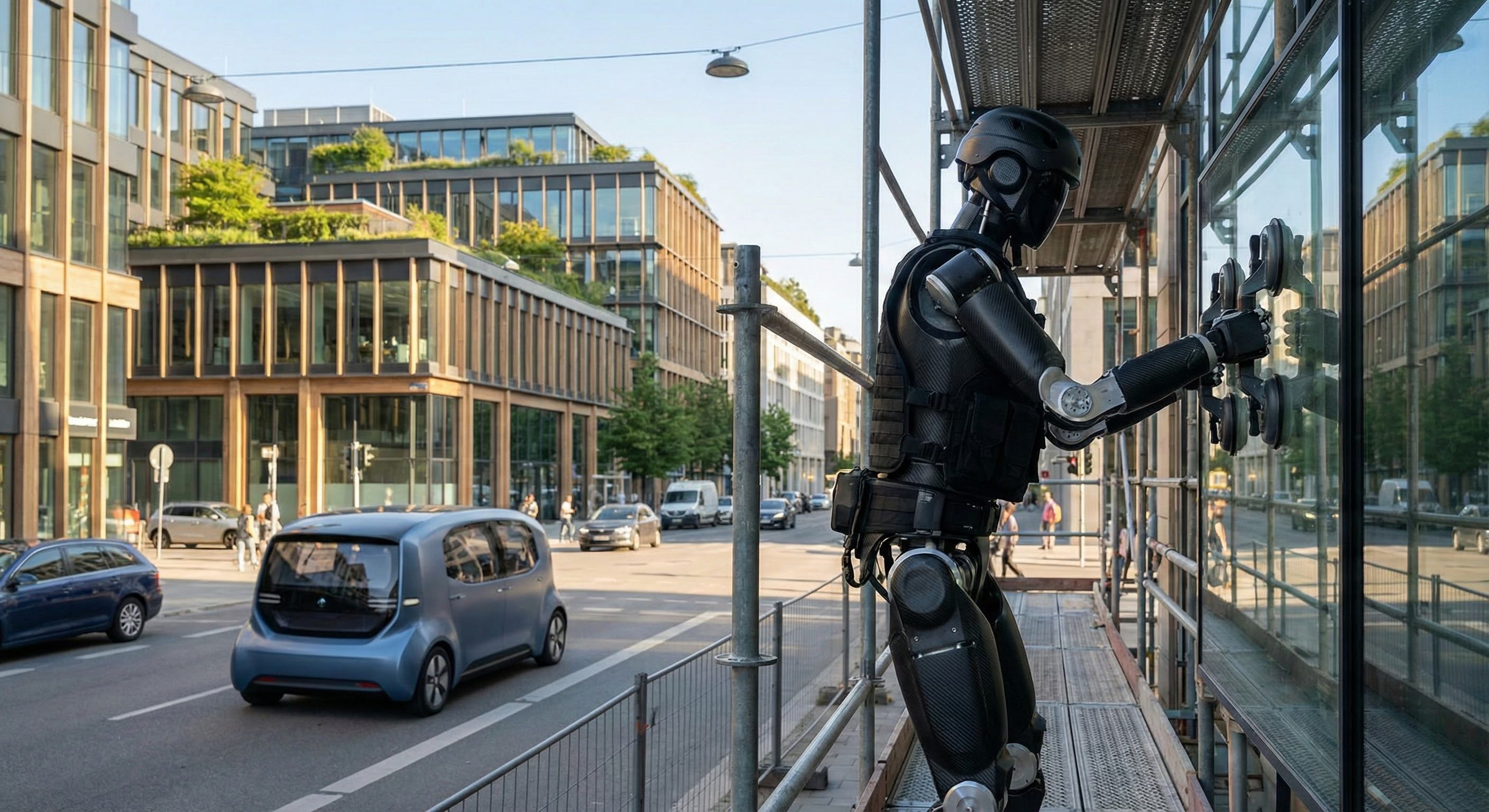
Jensen Huang said it plainly at CES: “The ChatGPT moment for general robotics is just around the corner. The next frontier of AI is physical AI.”
NVIDIA announced Cosmos—world foundation models trained on 20 million hours of video—and Isaac GR00T N1, which they call “the world’s first open Humanoid Robot foundation model.” Huang’s vision: “All the factories will be robotic. Factories will orchestrate robots.”
The strategic context matters. Declining birthrates in China and South Korea create what analysts call a “strategic imperative” for robotics. Humanoid robots are preferred because, as Huang notes, “terrain doesn’t need to be altered”—they fit into environments designed for humans.
Tesla’s Optimus and the Supply Chain That Doesn’t Exist
Tesla’s roadmap places Optimus production for external customers in late 2026, with a target capacity of 100,000 units per month.
Here’s the insight that struck me: there is currently no supply chain for humanoids. No standardized actuators, sensors, or batteries for bi-pedal robots. 2026 is the year this supply chain begins to form.
ARK Invest views this as the nascent stage of a market that could eventually exceed the automotive industry in value. Think about that. The “physical labor” market—previously immune to digital disruption—becomes addressable by software.
Robot-as-a-Service
For most businesses, purchasing a $20,000+ robot will be prohibitive. The dominant model will be Robot-as-a-Service—turning labor from a fixed cost to a variable cost. In China, the robot rental sector is already exploding. SMEs will “hire” fleets of robots for peak seasons without long-term commitment.
The juxtaposition fascinates me: we’re about to rent workers made of silicon the same way we rent servers made of silicon.
Part III: The Autonomous Fleet
Autonomous vehicles crossed a threshold in 2025 that most people missed.
Waymo’s Quiet Revolution
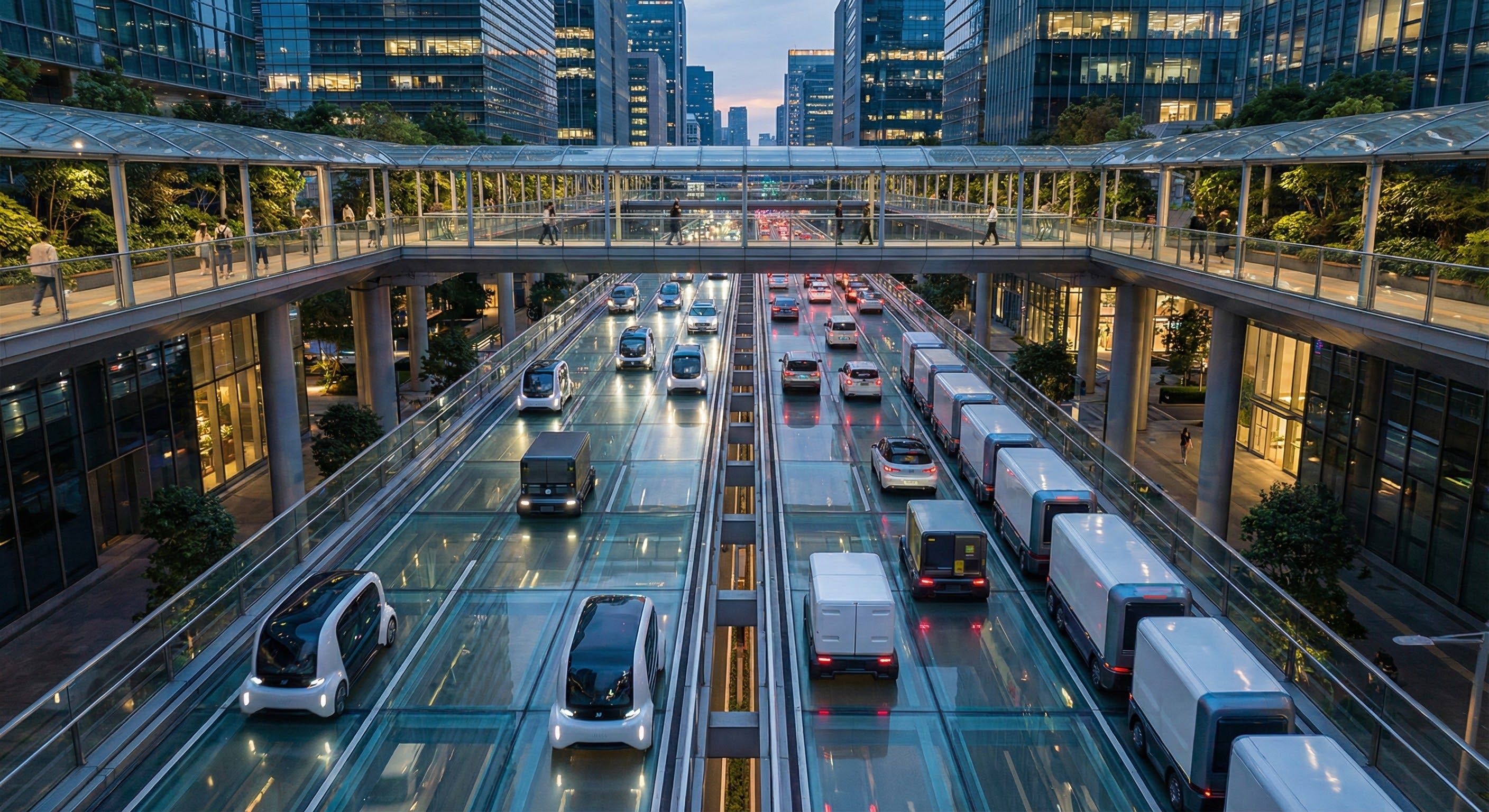
Waymo now delivers 250,000 autonomous rides per week across five markets. Their target for 2026: one million weekly rides. They’re expanding to 26 markets including Dallas, Denver, Miami, Nashville, Washington—and London as their first international market.
The safety data is unambiguous: human drivers are five times more likely to crash and cause injury than Waymo’s autonomous vehicles. Alphabet CEO Pichai has stated publicly that by 2027-28, Waymo will be “meaningful in our financials.”
Tesla’s Bet
Tesla launched its robotaxi service in Austin and the Bay Area in mid-2025, though still requiring safety monitors. Cybercab production is planned for April 2026, with a target of 30 US markets by year-end.
Musk claims “over a million fully autonomous Teslas on the road by 2026.” ARK Invest’s bull case prices Tesla at $2,600 by 2029 based on the robotaxi thesis.
The Fully Autonomous Supply Chain
Some predictions for 2026 include a Level 5 automation breakthrough—full generalized autonomy. The convergence of autonomous trucking, warehousing robots, and last-mile delivery droids creates the potential for a fully autonomous logistics chain—where a product moves from factory to doorstep without human touch.
Part IV: The Financial Architecture for Machines
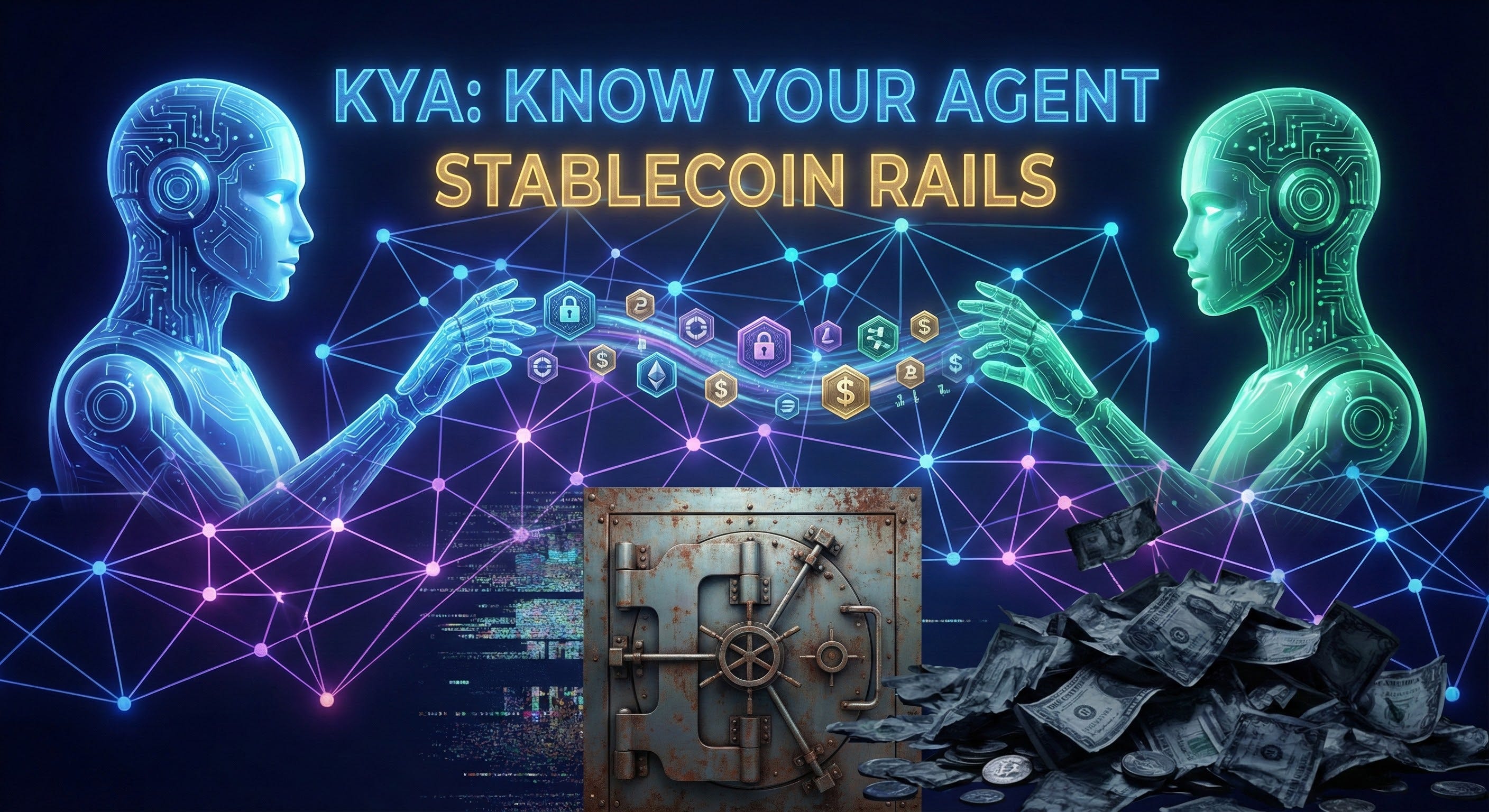
Here’s a paradox that’s about to resolve itself: AI agents don’t have bank accounts. They can’t pass KYC checks at a traditional bank. But they need to transact.
Stablecoins as Agent Currency
The a16z crypto team reports that 2025 stablecoin transaction volume hit $46 trillion—more than 20 times PayPal’s volume and nearly three times Visa’s.
Why? AI agents paying each other for data, GPU time, API calls. “Instantly and permissionlessly—without invoicing, reconciling, or batching.”
Traditional SWIFT rails—with three-day settlement times and high fees—are incompatible with the speed of AI. Venture capitalist Tomasz Tunguz predicts 30% of international payments will be issued via stablecoin by December 2026. Solana co-founder Anatoly Yakovenko predicts a $1 trillion stablecoin supply by 2026.
Know Your Agent
Compliance primitives are evolving from KYC (Know Your Customer) to KYA—Know Your Agent. Identity verification for autonomous software actors. This becomes the new regulatory frontier.
The blockchain, it turns out, isn’t primarily about human speculation anymore. It’s becoming the financial operating system for the AI economy.
Part V: Power Becomes the Constraint
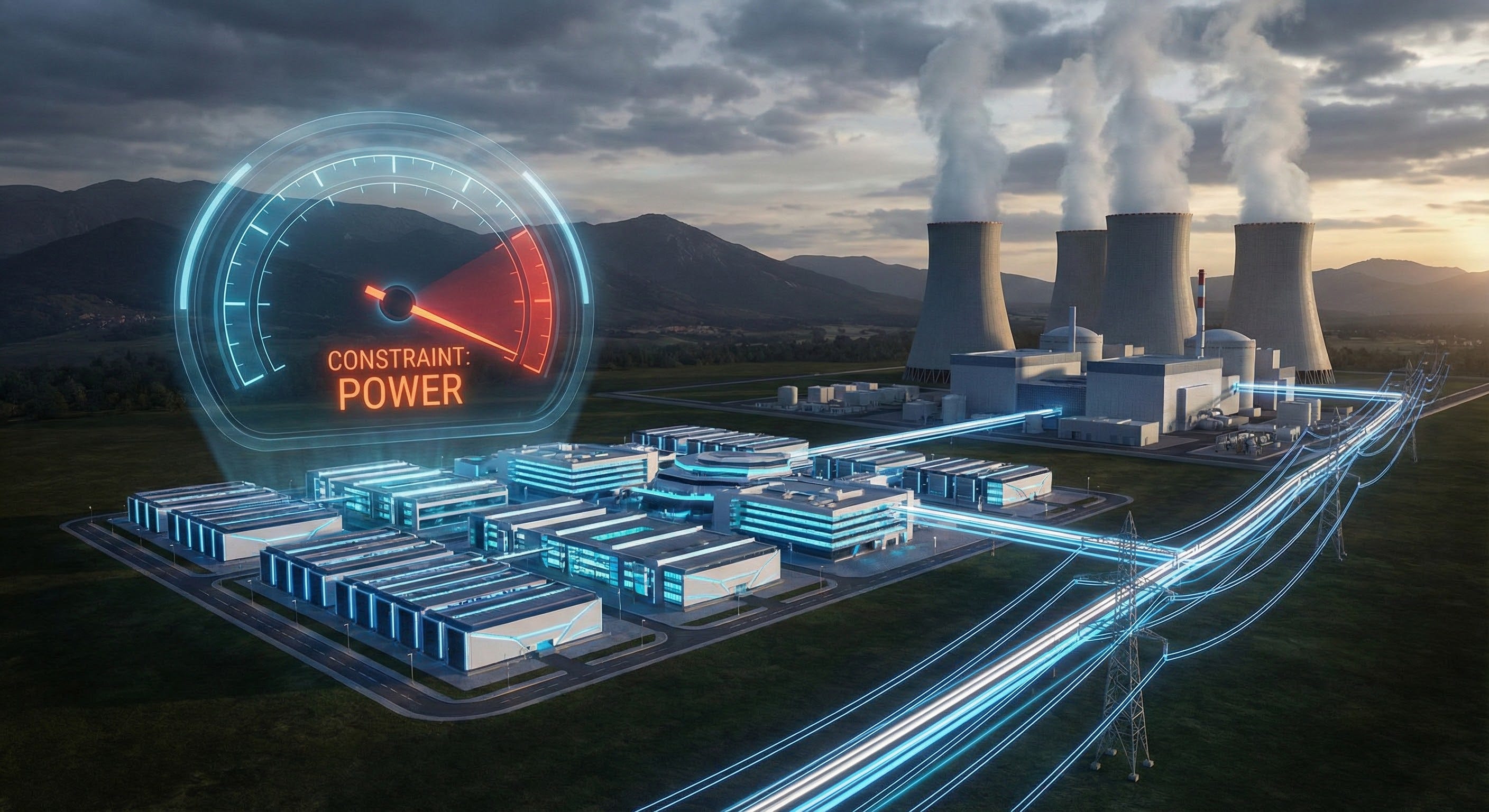
The binding constraint on AI in 2026 isn’t chips. It’s power.
The Nuclear Renaissance
BloombergNEF projects 15 nuclear reactors coming online in 2026, adding approximately 12 gigawatts of capacity. Microsoft signed a 20-year deal to revive Three Mile Island. Amazon secured 1,920 megawatts of nuclear power through 2042. The Palisades plant in Michigan will become the first US nuclear plant to return from decommissioning.
China has roughly 50% of all reactors under construction globally. Their Linglong One SMR—the world’s first commercial onshore small modular reactor—enters commercial operations in the first half of 2026.
Meta became one of the largest corporate purchasers of nuclear energy in American history this month, signing deals for up to 6.6 gigawatts by 2035—enough to power 5 million homes. Their Prometheus AI supercluster alone requires a gigawatt just to turn on.
The 3.5% of GDP Buildout
Tomasz Tunguz forecasts the US data center buildout will reach 3.5% of GDP in 2026—comparable to the interstate highway system or the telecom fiber buildout of the late 1990s.
The IEA projects data centers, AI, and crypto will consume 4% of global electricity by 2026, up from 2% in 2022. In Ireland, data centers will represent 32% of total electricity demand.
US datacenter capital spending is approaching $500 billion in 2026. Goldman Sachs projects data center electricity demand could rise 160% by 2030.
The risk is real: a potential “infrastructure washout” if revenue from AI applications lags behind capital expenditure. The chips and gigawatt-scale campuses are being built now. The killer apps to justify them may not materialize in time.
Part VI: Biology Becomes Programmable

CRISPR Goes Mainstream
In 2025, a baby named KJ Muldoon became the first person to receive a customized CRISPR treatment—gene editing that took place inside the body, not in a lab dish. The 45 authors of the study predicted “rapid deployment of patient-specific gene-editing therapies will become routine.”
The CRISPR therapeutics market is projected to reach $8.5 billion by 2027. Stanford Medicine’s CRISPR-GPT—an AI tool to accelerate gene therapy development—promises to “develop new drugs in months, instead of years.”
Healthcare AI is racing to market faster than any other vertical. On January 7, OpenAI unveiled ChatGPT Health—a dedicated experience with layered privacy protections and connections to 2.2 million healthcare providers. Five days later, Anthropic countered with Claude for Healthcare. Both launched within the same week. Both made the same promise: health conversations won't train foundation models. Healthcare—with its regulatory complexity, high stakes, and 230 million weekly health queries—is becoming the template for verticalized AI. Finance, legal, and education will follow.
The Convergence Stack
The biotech recovery is underway. The XBI index is up 85% from April 2025 lows. M&A activity is accelerating—J&J acquired Intra-Cellular for $14.6 billion, Novartis bought Avidity for $12 billion.
What’s driving it? AI-accelerated discovery. The convergence of artificial intelligence and biological engineering. Sand becoming sentient, now teaching us to edit the code of life itself.
The Cautionary Voices
A balanced view requires the warnings.

Geoffrey Hinton—2018 Turing Award winner, described as the “godfather of AI”—resigned from Google in 2023 to speak freely on risks. His concerns: job destruction, militarized AI systems, autonomous weapons, loss of human control.
Yoshua Bengio—also a 2018 Turing Award winner—founded LawZero, an AI safety nonprofit. His paper in Science, signed by 24 experts including Daniel Kahneman, called for one-third of AI R&D budgets to be devoted to safety.
In September 2025, over 200 signatories including Hinton and Bengio demanded international “red lines” by the end of 2026—prohibiting AI self-replication without safeguards, massive-scale human impersonation, and integration into lethal autonomous weapons.
Daniel Kokotajlo, a former OpenAI researcher, published a detailed scenario at ai-2027.com projecting that AIs will improve from “mostly doing the job of an engineer” to “eclipsing all humans at all tasks” during 2027.
A signal from inside the machine: Slack's Ryan Gavin predicts 2026 will be "the year of the lonely agent"—enterprises deploying hundreds of agents per employee that sit idle like unused software subscriptions. The technology is ready. The organizational metabolism to use it isn't. This gap will define which companies capture value and which just add cost.
I take these warnings seriously. The glass is both half full and half empty. But I’ve also lived through enough cycles to know that pessimism has never been a reliable predictor—and has never been a useful operating system.
The Big Tech Shuffle
The corporate landscape is being reshuffled as I write this.
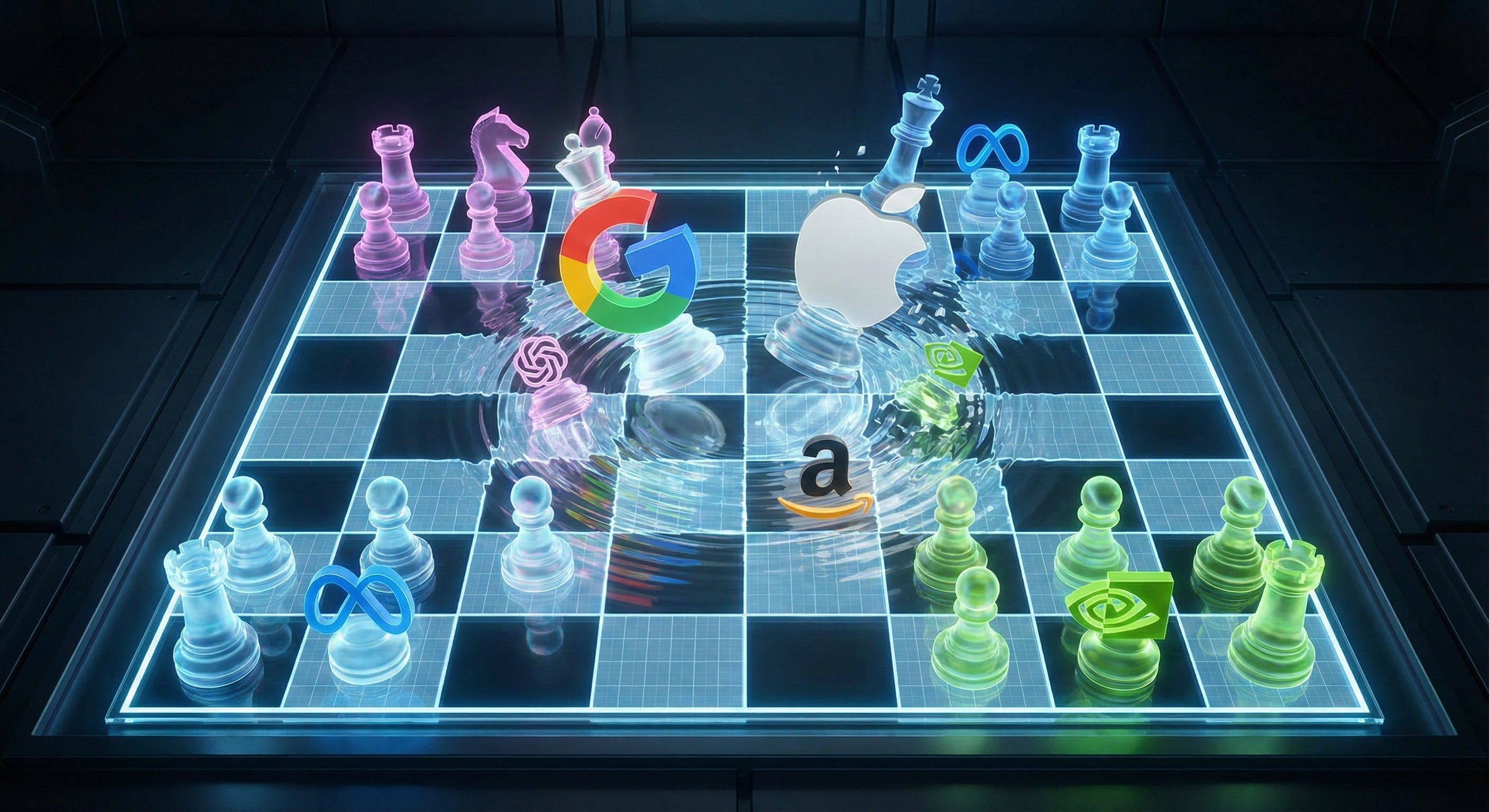
OpenAI is likely heading toward an IPO in 2026. Going public brings quarterly earnings pressure, which will drive a strategic shift from “Model Development” to “Product Development”—building the application layer, governance tools, fine-tuning environments, agent orchestration.
Amazon may be forced to acquire a major AI lab. Despite AWS success, they lack a proprietary frontier model. Speculation targets include Anthropic—in which they’ve already invested heavily.
Google faces existential danger to its core search business. As agents bypass search engines to fetch data directly, the “10 blue links” model erodes. Agents don’t click on ads.
Apple may have its best year ever, driven by what Alex Kantrowitz calls the “AI Love Boom”—users forming emotional attachments to AI agents on personal devices. Apple’s privacy-centric stance positions them to host the most intimate AI relationships.
Meta continues to commoditize the stack through open-weight Llama models. Their play isn’t to sell AI—it’s to ensure the ecosystem is built on architecture they influence.
What This Means for You
I’m not going to pretend I have a tactical playbook for navigating what’s coming. I’ve spent 30 years in technology and I’ve never seen a convergence like this.
But I do have a framework. I borrowed it from Diamandis and others, and I’m practicing it daily.
The Abundance Mindset
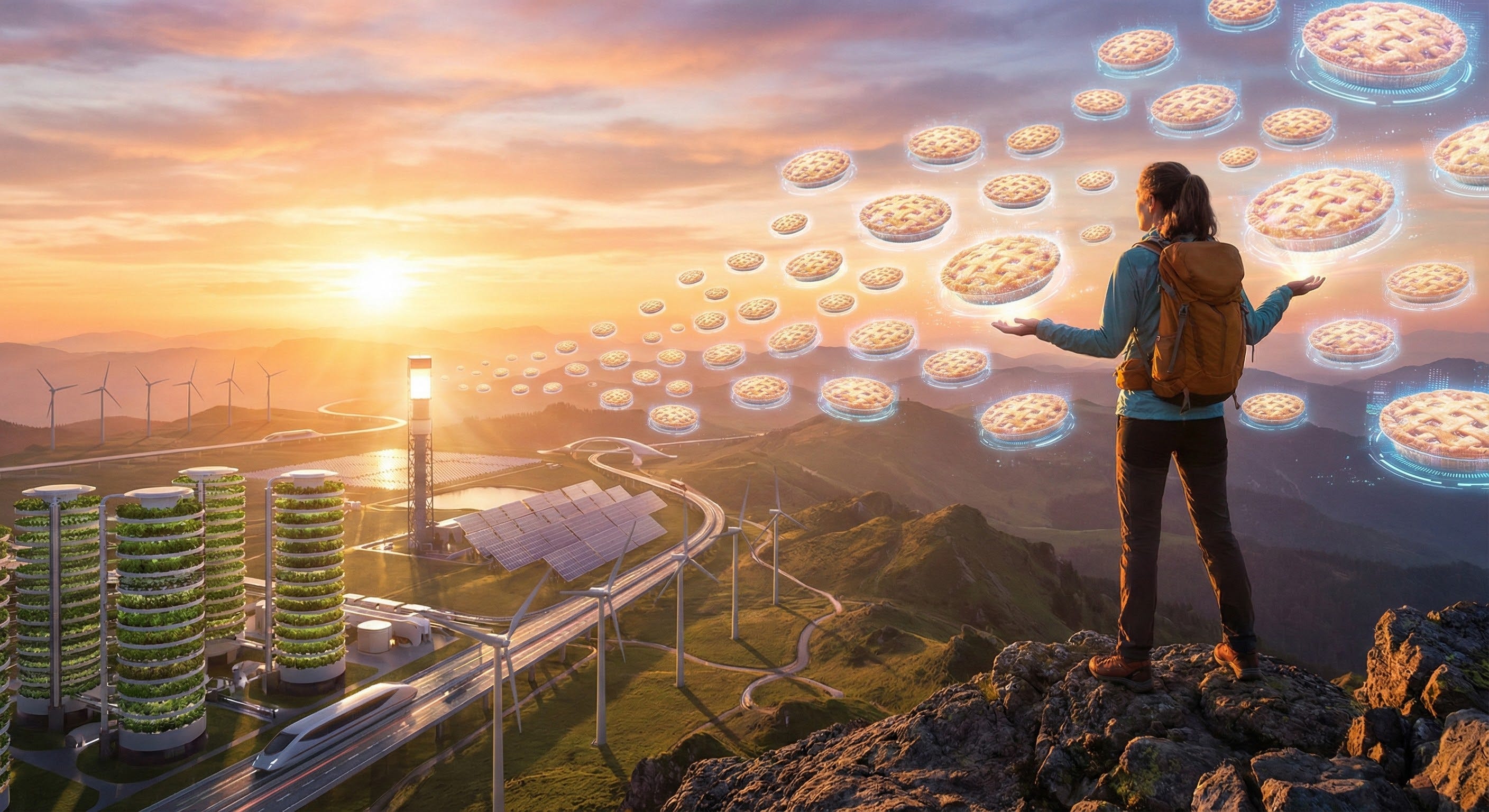
The default human response to disruption is scarcity thinking. The pie is fixed. Your neighbor’s slice reduces yours. Protect what you have. Resent what you’ve missed.
The alternative is abundance thinking. Technology is a force that converts scarcity into abundance, over and over again. The pie isn’t fixed—exponential technology enables us to bake more pies. Next year will bring more opportunities than this year. See opportunities where others see problems.
This isn’t naive optimism. It’s pattern recognition. I’ve watched technology create abundance from scarcity my entire career—from the internet democratizing information to smartphones putting supercomputers in every pocket to AI making intelligence itself cheap.
Diamandis identifies five core technologies driving abundance: artificial intelligence, robotics, energy storage, DNA sequencing, and blockchain. All five are hitting their inflection points simultaneously in 2026.
The Five Threads
As I’ve synthesized all this research, five meta-themes keep emerging:
Autonomy becomes the new interface. Agents, robotaxis, lab automation, autonomous finance. The question shifts from “how do I use this tool?” to “what do I want done?”
Infrastructure is destiny. Compute, energy, chips, gigafactories. The builders of infrastructure—even when the payoffs aren’t obvious—are positioning for futures we can’t yet imagine.
Trust becomes a product feature. Evaluations, audit trails, provenance, compliance, safety cases. As AI does more, proving what it did becomes essential.
Finance and identity rewire for machines. Know Your Agent. Programmable money. Tokenized rails. The financial system is adapting to serve software actors, not just human ones.
Timelines diverge—capability rises anyway. Whether AGI arrives in 2026 or 2030, the trajectory is clear. The question isn’t if, but when and how we adapt.
The Invitation
I’ve lived through turning points before. A 1991 recession that bankrupted our business. The 1995 Wired cover that showed me the internet was coming. The 2008 great financial crisis. The 2020 pandemic.
Each time, the people who thrived were the ones who saw disruption as opportunity. Who built while others retreated. Who embraced uncertainty as the path to discovery.
2026 will be the most disruptive year in modern human history. That’s not a warning—it’s an invitation.
The question isn’t whether the world will change. It’s whether you’ll be a passive observer or an active participant. Whether you’ll let disruption happen to you, or let it happen through you.
I know which I’m choosing.
Let’s make 2026 great!
-Deven
This article synthesizes predictions from 85+ sources. I am not making original predictions—I am curating and interpreting what the world’s leading minds are saying about 2026. The abundance mindset framework is adapted from Peter Diamandis. All errors in synthesis are my own. Sources & Further Reading
Primary Research Reports
Stanford HAI AI Index 2025
McKinsey State of AI 2025
a16z Big Ideas 2026 (Parts 1-3)
ARK Invest Big Ideas 2025
Forrester 2026 Predictions
Gartner Top Strategic Technology Trends 2026
International AI Safety Report 2025
Frontier AI Lab Sources
Sam Altman: “Reflections,” “Three Observations,” “The Gentle Singularity”
Dario Amodei: “Machines of Loving Grace”
Jensen Huang keynotes (NVIDIA CES, GTC)
Abundance Framework
Peter Diamandis (diamandis.com)
Abundance 360 Summit 2026
Cautionary Perspectives
Geoffrey Hinton interviews (TIME, MIT Technology Review)
Yoshua Bengio: “Managing extreme AI risks amid rapid progress” (Science)
UN Open Letter on AI (September 2025)
Daniel Kokotajlo / ai-2027.com
2026 truly feels like the year AI moves from theory to transformative, physical impact
I love your deep dive on the convergence of cheap intelligence, physical automation, and new financial rails. I’m convinced this disruption will create enormous abundance, but the ride will be bumpy. Crazy times. Amazing times.
A few micro-points to add:
1. Agent plumbing is production-ready: LangChain-style frameworks plus managed runtimes like Amazon Bedrock/AgentCore have turned agents from research demos into engineering problems you can scale and govern.
2. Humanoids are moving into ops: Digit and other systems are already in fulfillment pilots (GXO, Mercado Libre), proving physical AI can scale in human workflows.
3. Biology is computational-first: AlphaFold’s 200M+ predicted structures are routine inputs to discovery, speeding early-stage R&D. Demis’ 2024 Nobel formalized that shift.
Two extra trends worth watching: industrial digital twins (NVIDIA Omniverse) and solid-state battery pilots (QuantumScape + OEM partners). Both materially change how fast and cheaply we can scale robotics and edge compute.
Great work as always, Deven.